
Scroll through recent Malibu West listings and something looks off for a market this small. Two homes on the same street, both somewhere between 2,400 and 4,200 square feet, both behind the same guard gate, can carry price tags well over a million dollars apart. In most Malibu neighborhoods, that gap gets explained by lot size, a different architect's vision, or a view corridor one property has and the other doesn't. In Malibu West, those explanations don't tell the whole story, because most of the neighborhood was built off the same handful of blueprints.
That's the detail buyers scanning a portal median tend to miss. The floor plan was never the variable here. Something else is doing all the work, and once you see what it is, the average price you see quoted for Malibu West stops looking like a single number and starts looking like two different markets averaged together.
The Repeating Blueprints Behind Nearly Every Address
Malibu West is a built-out subdivision of roughly 201 homes, most constructed in the 1960s and 1970s. Some community history materials put the count closer to 238 residences. That gap is worth flagging if you're cross-referencing HOA documents against MLS counts, since the two figures are likely measuring slightly different things at different points in the tract's history, not disagreeing about the facts on the ground.
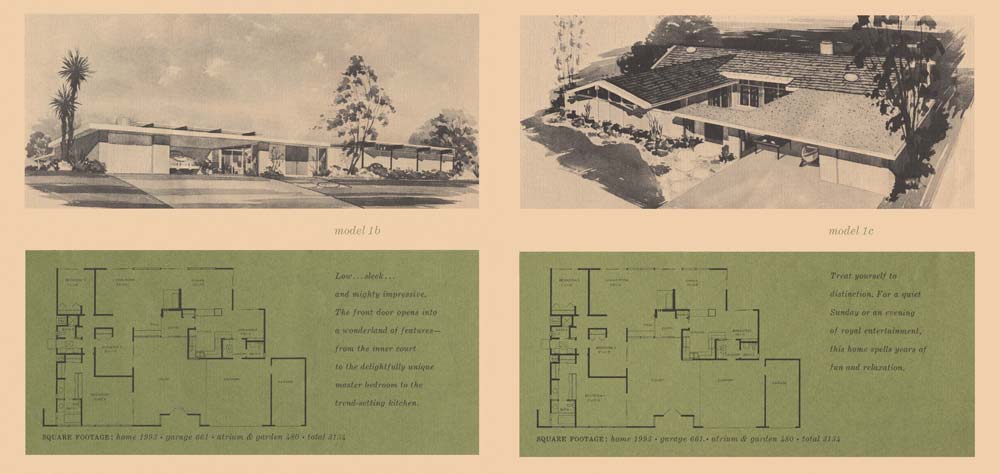
What's consistent across both counts is the design story. The overwhelming majority of homes came from just five or six base floor plans, drawn up by architects Nisan Matlin and Eugene Dvoretzky before Joseph Eichler had established the tract-home look that made his California developments famous. When a listing describes a home as "an original ranch model," it's usually not describing a one-off layout. It's describing one of a handful of shells that repeat block after block through the neighborhood.
What Every Home Already Comes With
Before you can find the real variable in Malibu West pricing, you have to rule out the parts that don't vary. Nearly every home in the tract carries the same baseline package:
- A 24-hour guard-gated entrance
- Private streets maintained under the community's governing documents
- Community tennis courts
- Access to the private Malibu West Beach Club
That bundle is baked into the asking price whether the kitchen was gutted last year or hasn't been touched since the 1970s. It's a constant, not a differentiator, which is exactly why it can't explain a seven-figure spread between two listings that otherwise look alike on paper. If you're trying to find what's actually moving the number, this is the part you set aside first.
What the Same Bones Look Like at Different Stages
Line up recent Malibu West listings by renovation state rather than by floor plan, and the pattern becomes obvious.
Renovation State | What Shows Up in the Listing | What It Signals to a Buyer |
|---|---|---|
Original or lightly updated | A post-and-beam, four-bedroom, two-and-a-half-bath home marketed around its original open floor plan and mid-century character | You're largely paying for the gate, the beach club, and the address. The interior work is still ahead of you. |
Full interior remodel, same footprint | A single-story home reworked with a new center-island kitchen inside a roughly 2,456-square-foot original shell | The floor plan didn't grow, but every finish did. Price reflects finish level, not square footage. |
Ground-up rebuild | A home completed in 2025 at approximately 4,201 square feet, with a mid-century-inspired design, canyon and mountain views, and Malibu West Beach Club access built into the marketing | This is functionally a new house wearing the neighborhood's original envelope. It competes on rebuild economics, not on being "a Malibu West floor plan." |
A fourth example fits the middle of that spread: a modern farmhouse completed in April 2024, set on one of the larger, more usable lots in the tract, on a tree-lined cul-de-sac corner. Same neighborhood, same amenity bundle, a different renovation generation entirely.
These aren't hypothetical extremes. They're recent listings and closings inside the same roughly 201-home tract. Set them side by side and the shell barely moves the number. The renovation generation does almost all of the work.
The Trailing Numbers Blend Two Different Products
Over the trailing twelve months, the average sale price recorded for homes in Malibu West sat close to $2.9 million, down about 6% from the prior twelve-month period. Read on its own, that looks like a market cooling. It's more likely a market where the mix shifted, meaning more original or lightly updated homes changed hands relative to full rebuilds during that window, not that any single rebuilt home lost value.
Zoom out to the broader western Malibu corridor that includes Malibu West, and the sample-size problem gets sharper. Over the three months ending May 2026, that wider corridor posted a median sale price of $4.0 million, essentially flat compared to the same period a year earlier, while price per square foot jumped 38% year over year. At the same time, homes took a median of 256 days to sell, more than double the 122 days recorded a year earlier, on a total of just 10 recorded sales for the month, up from 5 a year prior. When ten transactions can move a corridor-wide median and price per square foot by double digits in either direction, applying that number directly to a single 201-home tract, without knowing which side of the renovation line the underlying comps fell on, is asking a thin and lumpy sample to answer a question it wasn't built to answer.
The Governing Documents Add a Second Layer
There's a transactional wrinkle here that matters most if you're the one weighing a rebuild rather than buying one already finished. Malibu West's older CC&Rs expired in 1999, and a separate 1972 declaration reportedly remained enforceable in some form at least through 2010. Dues structures aren't uniform across the tract either. Some homes are billed annually, others monthly with an added second assessment, and single-family dues differ from condo dues.
None of that shows up in a listing photo. Before you assume you can replicate the 2025 ground-up rebuild on a similar lot, confirm which architectural guidelines are currently enforceable for that specific parcel. The copy sitting in an old escrow file may not be the version that actually governs today. Our Malibu West beach club and HOA guide walks through what to request and why the paperwork matters as much as the finishes.
What This Actually Changes If You're Comparing Neighborhoods
If you're cross-shopping Malibu West against other Westside pockets, the median price you saw on a portal is telling you less than it looks like it's telling you. The more useful comparison is renovation generation against renovation generation. A fully rebuilt Malibu West home with beach club access belongs in the same conversation as other move-in-ready Malibu properties in a similar price band, not against the tract's own decades-long average. An original shell with good bones should be priced and negotiated as a renovation project with a known ceiling, since the five or six base floor plans set a rough envelope for what the finished square footage can become.
Two questions do more work than the headline price: what generation of renovation is this, and where does the lot sit relative to the gate and the beach club walk. Those two answers explain more of the spread than anything on the spec sheet. You can see how the floor plans and amenity package fit together on our Malibu West neighborhood page.
A Few Direct Questions
Does every home in Malibu West come with beach club access? Most do. Access to the private Malibu West Beach Club is tied to the community's governing documents rather than to any individual floor plan, which is part of why it doesn't explain the price differences between homes.
Are the original 1960s and 1970s homes considered teardowns? Not automatically. Several of the five or six base floor plans have been preserved and lightly updated rather than replaced. Each one should be evaluated on its own renovation history rather than treated as part of a uniform "original stock" that's all headed for the same outcome.
How do I confirm which HOA rules apply to a specific listing? Ask for the current recorded declaration and any amendments rather than relying on an older copy that may be circulating in a sale package. Malibu West's governing documents have changed more than once since the 1970s, and the version on file matters more than the version in memory.
Malibu West rewards buyers and sellers who read renovation history as carefully as they read square footage. If you want to know which listings are trading on the gate and the beach club, and which are trading on genuine finish-level work, MalibuMark can walk you through the comps that actually match your renovation tier. Let's schedule an appointment.
This article is general information, not legal, tax or financial advice. Consult a qualified professional about your situation.