
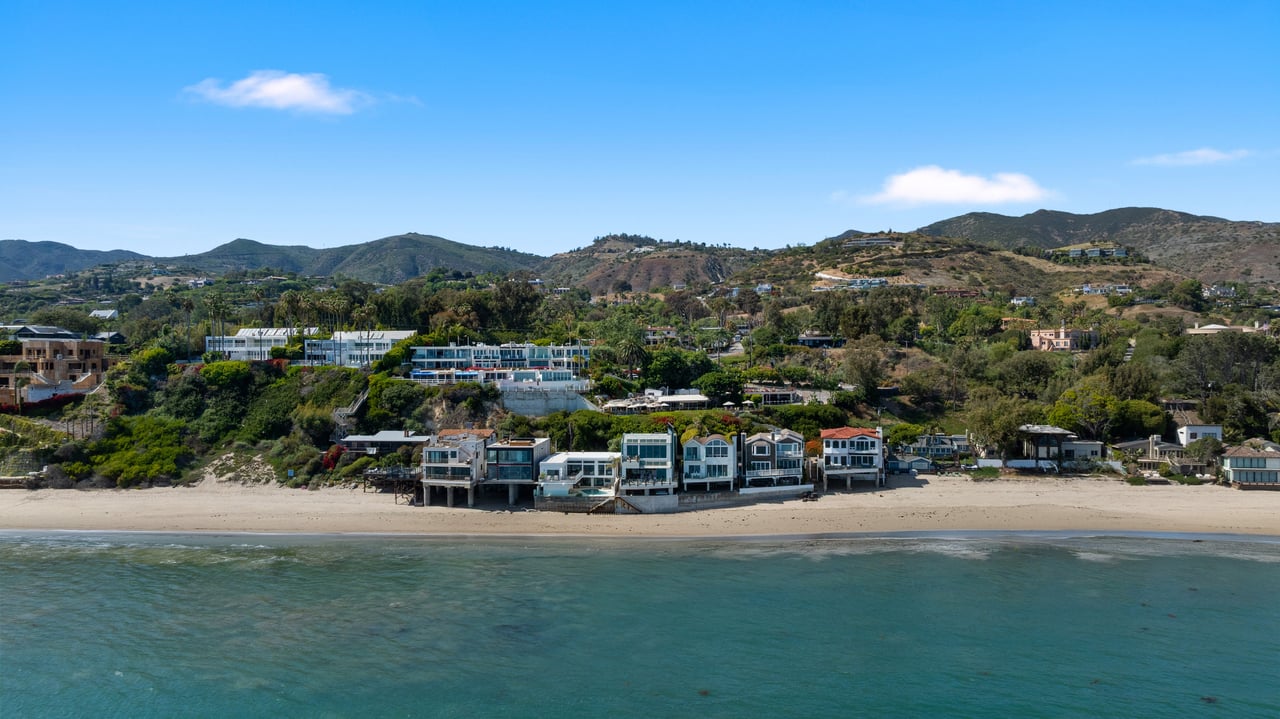
Search for the Escondido Falls trail this year and you'll likely land on a red banner. Yelp's listing for Escondido Canyon Park reads "Temp. Closed," sitting above 575 reviews and nearly 1,300 photos from people who hiked it without incident. Meanwhile the trailhead itself, 27200 Winding Way, sits directly across Pacific Coast Highway from Escondido Beach, close enough that most residents pass it every time they head up or down PCH.
So which is it. Open or closed.
The honest answer tells you more than a yes or no would. The trail is open. The label is wrong. And the reason it's wrong is tied to a fight that's been building since 2024 between the City of Malibu and the agency that runs the park, a fight that has a lot more to do with your daily walk than a stale directory tag ever could.
The Trail Itself, In Plain Terms
The Edward Albert Trail, named for the actor and longtime local conservation advocate, runs through the Escondido Canyon Natural Area for roughly 4.2 miles round trip, according to the Mountains Recreation and Conservation Authority, the agency that manages the land. It climbs through oak woodland, riparian growth, and coastal sage scrub to Escondido Falls, a multi-tiered drop that reaches 150 feet, the tallest in the Santa Monica Mountains. The falls run on rainfall, so they can be a trickle in August and a real waterfall in February. The upper tier sits on private property and has never been open to the public, closure rumor or not.
Parking at the Winding Way lot costs $12. The trail does close occasionally and legitimately. MRCA's own notification log shows a documented closure at the Edward Albert trailhead from June 17 through June 20, 2024. That's the kind of closure worth knowing about. It's also not what's happening right now.
The Fight Behind the Label
The real story isn't a trail closure. It's a lawsuit, and it's been building since well before this year.
As early as July 2024, the City of Malibu put MRCA on written notice that visitors overflowing the small Winding Way lot were parking along the Pacific Coast Highway shoulder and crossing on foot, a pattern the city called extremely dangerous given the traffic volume and the lack of a safe pedestrian crossing at that stretch of PCH. MRCA did not change course. On February 8, 2026, a pedestrian named Joshua Farmer was struck and killed on PCH near Winding Way, in the immediate vicinity of the trailhead the city had flagged more than a year and a half earlier.
That death sits at the center of a lawsuit the City of Malibu has since filed against MRCA, a 257-page complaint that goes well beyond one intersection. The filing alleges a pattern of inadequate brush and fuel clearance across the agency's roughly 75,000 acres of parkland, with fewer than 200 of those acres treated in the year before recent wildfires moved through Malibu-area open space. It also alleges MRCA has failed to consistently enforce sunset trail closures, leaving hikers stranded after dark and triggering emergency responses, and that the agency has let environmental damage accumulate in violation of the California Coastal Act.
What the lawsuit does not ask for is a shutdown. The city has been unambiguous about that point, stating plainly that "Malibu has not closed, and is not seeking to close, Escondido Canyon Park or the Waterfalls." The goal, as the city frames it, is forcing MRCA to manage the land it already controls, not taking that land away from the public.
MRCA, for its part, has pushed back on how the dispute is being characterized publicly, which is part of why the online confusion persists. A directory flag reading "Temp. Closed" isn't a neutral fact here. It's noise generated by an unresolved fight between two public agencies, and it's been sitting on a major platform long enough to shape what visitors and neighbors alike assume about a trail that's actually operating as it always has.
What Actually Changes for You
If you live within walking distance of this trailhead, the lawsuit matters less as legal drama and more as a set of facts about the ground you already cross.
The parking situation described in the city's complaint is the same one that exists today. The Winding Way lot is small and fills fast. When it does, the overflow lands on the PCH shoulder, the exact spot named in both the city's 2024 warning letter and the fatal collision a year and a half later. If you're deciding whether to use the paid lot or park along the highway to save twelve dollars, that decision now carries a documented safety history attached to it.
Sunset closures are enforced inconsistently, per the city's own complaint, which means a posted closing time isn't a guarantee that gates or rangers will be there to hold it. If you're timing a late-afternoon hike to catch golden hour at the falls, plan your return with the assumption that nobody's clearing the trail for you after dark.
Nothing in the current record points to an actual shutdown. MRCA's own park page for Escondido Canyon carries no closure notice as of this writing, and independent trail-status trackers like Hikespeak reported no closures on this trail as of this spring. If a real closure does happen, whether for fire risk, trail damage, or an emergency, it will show up on MRCA's park notification page before it shows up as a Yelp banner. That page, not a business directory, is the source worth bookmarking if you actually use this trail.
A short version of what that means in practice:
- Use the Winding Way lot when you can. The PCH shoulder is the specific hazard named in the city's complaint, not a shortcut.
- Don't assume a posted sunset closure is enforced. Build your own margin into a late hike.
- Check MRCA's park notification page for real closures, not a stale platform flag.
- Expect the falls to run thin outside the rainy months. That's the water table talking, not a maintenance issue.
The Useful Skill Here
Living next to contested public land teaches you something a listing agent's tour never will: how to tell the difference between a platform's outdated flag and an agency's live notice. Escondido Beach residents get a small, ongoing test of that skill every time they check whether their own trailhead is open. Right now, it is. The dispute over how safely it's run is real, unresolved, and worth watching, but it's a management fight, not a closure.
If you're weighing a move to this stretch of coast, or you already live here and want a read on what's actually happening beyond what a search result tells you, Mark Gruskin has spent enough time on this part of Malibu to separate the noise from what matters. Let's schedule an appointment.